Published on
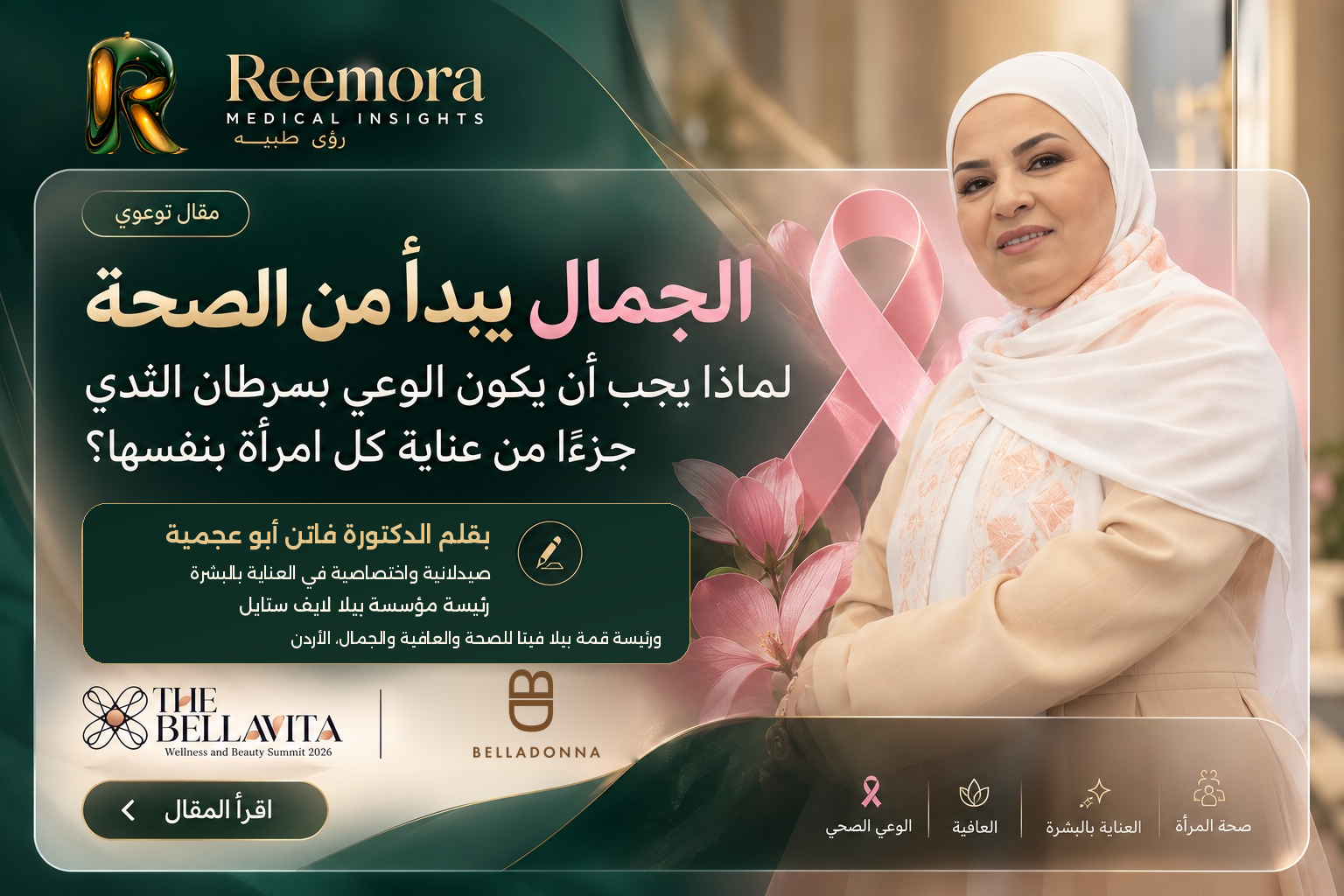
Beauty begins with health
Why should breast cancer awareness be part of every woman’s self-care?
Self-care goes beyond what we see in the mirror
We notice a change in our skin and choose suitable care. But caring for ourselves goes deeper when it also includes our health: understanding our bodies and not putting off questions about things that concern us.
From a perspective that brings together pharmacy, skincare and women’s wellbeing, talking about beauty can gently open the door to health awareness. This does not mean that cosmetics protect against breast cancer or that appearance tells us about our internal health. Rather, it means giving health a place in each woman’s self-care routine, without fear or self-blame.
Breast cancer in a few figures
The global estimates refer to 2024; the WHO page was updated on 3 July 2026. Global source ↗ Austrian source · p. 19 ↗
“Not in my family” does not mean “no risk”
The absence of a known family history does not rule out the possibility of developing breast cancer. The WHO states that most women diagnosed with the disease have no known family history of it, and that around 80% of cases occur in women with no specific risk factors other than sex and age. This is a general figure, not an estimate of any individual woman’s risk. WHO ↗
Reliable information is part of self-care
Reliable health information can help us ask clearer questions, but it does not provide a diagnosis or determine treatment. In pharmacy and skincare, health education must remain within the relevant professional scope, with referral to an appropriate specialist when needed.
If you notice a change that concerns you or have questions about breast health, consult an appropriate doctor. Do not change prescribed medication based on an article or digital content.
What about Austria?
Data year: 2024
Report publication year: 2026
The official report Krebserkrankungen – Berichtsjahr 2024 recorded 6,959 new cases of breast cancer among women in 2024. This figure refers to invasive malignant cases in women, not the total for both sexes. The report was published in 2026, and its registry tables are based on data updated on 12 January 2026. Statistik Austria · p. 19 ↗
Decisions about screening or the assessment of a new change should be discussed with a qualified clinician, taking age, medical history and individual risk into account. This article does not provide a single screening schedule for all women.
Returning to the meaning of self-care
Skincare can be the starting point for a wider conversation about women’s wellbeing, but it does not replace healthcare. We encourage self-care that listens to the body and gives health questions the attention they deserve, without reducing a woman to her appearance or her fear of illness.
What to remember
The key points in 60 seconds
- Self-care includes health and goes beyond appearance.
- The absence of a family history does not rule out breast cancer.
- Reliable information helps us ask questions; it does not replace medical advice.
- If you notice a change that concerns you, consult an appropriate doctor.
- Developing an illness is not evidence of inadequate self-care.
This content is for education, awareness and general information. It does not replace medical consultation, diagnosis, individual advice or screening recommendations tailored to each person.
Medical sources
- WHO — Breast cancer ↗Updated: 3 July 2026 · Global estimates: 2024 · Risk factors and family history. The WHO attributes the estimates to the Global Cancer Observatory / IARC.
- Statistik Austria — Krebserkrankungen, Berichtsjahr 2024 ↗Published: 2026 · Data: 2024 · p. 19; 6,959 cases among women and 7,041 for both sexes combined. These figures refer to different groups.
Last editorial source check: 15 October 2026. The news item below documents media coverage and is not a source for the medical figures.
Dr. Faten Abuajameia and Bella Vita in the media
Jordan News Agency — Petra
Health and beauty care conference opens with experts and professional association representatives
Coverage of the conference opening mentioning its chair, Dr. Faten Abuajameia, and the Bella Lifestyle Foundation.
Read the original coverage ↗