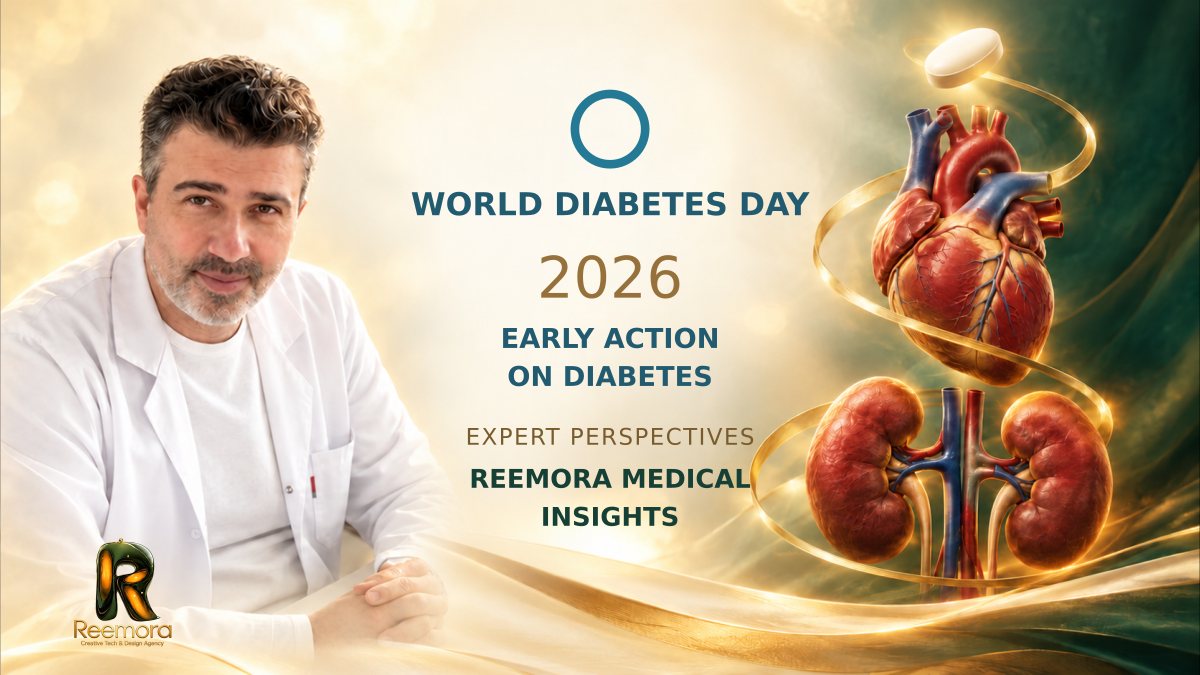

The treatment of type 2 diabetes has advanced considerably in recent years. Today, treatment is no longer solely about lowering blood glucose levels.
Depending on the individual situation, protecting the heart and kidneys, body weight and reducing future health risks may also play an important role in choosing an appropriate treatment.
This also changes a central question in diabetes care.
Rather than asking only: “How high is the blood glucose level?” we should also ask: “Which treatment best fits this person’s overall health situation?”
Key takeaways
- Modern diabetes medicines can offer health benefits beyond lowering blood glucose alone.
- Certain medicines in the SGLT2 inhibitor and GLP-1-based treatment groups can play an important role for suitable patients, particularly in relation to the heart, kidneys and body weight.
- The choice of treatment must be individualised and medically supervised.
SGLT2 inhibitors: how the kidneys become part of the mechanism
Well-known medicines in this group include:
- Empagliflozin
- Dapagliflozin
SGLT2 inhibitors act in the kidneys.
In simple terms, they allow some glucose to be excreted in the urine rather than returned to the body.
This can lower blood glucose levels.
For certain patient groups, however, their importance extends beyond lowering blood glucose alone.
Keeping the heart and kidneys in view
In appropriately selected patients, certain SGLT2 inhibitors can help reduce the risk of hospitalisation due to heart failure.
They can also slow the progression of chronic kidney disease in certain patient groups.
This illustrates an important shift in modern diabetes care:
Treatment success is not measured solely by how much blood glucose falls. Potential protection of important organs can also play a role in treatment decisions.
SGLT2 · understanding the mechanism
- Glucose in the blood
- Filtration in the kidneys
- Reduced glucose reabsorption
- More glucose is excreted in the urine
What side effects and precautions matter?
Like all medicines, SGLT2 inhibitors can cause side effects.
These include fungal infections in the genital area.
Increased fluid excretion can also lead to dehydration and a fall in blood pressure. This can be particularly relevant for older people or those at increased risk.
A rare but serious complication is diabetic ketoacidosis.
Under certain circumstances, it can occur without exceptionally high blood glucose levels.
During acute illness, substantial fluid loss, prolonged fasting or before planned surgery, treatment may need to be temporarily interrupted.
Whether and when a medicine should be paused must be decided by a doctor. Medicines should not be stopped or changed independently.
GLP-1-based treatments: considering blood glucose and weight together
Well-known medicines in this group include:
- Semaglutide
- Liraglutide
- Dulaglutide
These medicines mimic the action of the body’s own gut hormone GLP-1.
When blood glucose is elevated, they promote insulin secretion, influence gastric emptying and can increase feelings of fullness.
They can therefore improve blood glucose control and support weight loss.
Some of these medicines are given by injection, in some cases once weekly. Semaglutide is also available in tablet form in certain formulations.
More than weight loss
GLP-1-based treatments are often associated with weight reduction. Their medical role, however, extends beyond this.
Certain medicines in this group have demonstrated beneficial effects on cardiovascular risk in selected patient groups.
Potential kidney benefits are also increasingly considered when evaluating individual medicines and specific patient groups.
The decision to use a treatment should therefore not be based solely on its potential effect on body weight.
What side effects may occur?
The most common side effects include gastrointestinal symptoms, particularly:
Nausea, vomiting, diarrhoea or constipation.
These symptoms are especially likely at the start of treatment or after a dose increase.
The dose is therefore generally adjusted gradually to improve tolerability.
Regular medical follow-up and, depending on the individual situation, appropriate monitoring remain important.
GLP-1 · more than an effect on weight
- Mimicking GLP-1 activity
- Glucose-dependent insulin response
- Influencing gastric emptying and fullness
- Supporting blood glucose control and weight management
- Cardiovascular benefits of certain medicines in suitable groups
SGLT2 or GLP-1 – which is better?
There is no single answer that applies to everyone.
There is no one diabetes medicine that is equally suitable for all people.
Factors that may influence treatment decisions include:
- Blood glucose control
- Body weight
- Kidney function
- Cardiovascular disease and heart failure
- Other medical conditions
- Tolerability
- Individual life circumstances
- Cost and availability
For some patients, combining different medicine groups may also be appropriate.
The decision should always be individualised and made together with the treating doctor.
What informs an individual medical decision
- Blood glucose
- Body weight
- Kidney function
- Cardiovascular disease / heart failure
- Other medical conditions
- Tolerability
- Individual circumstances
- Individual medical decision
Modern diabetes care means individualised medicine
The development of modern medicines offers new possibilities for treating type 2 diabetes.
At the same time, treatment decisions are becoming more individualised.
The aim is not to select the “newest” or best-known medicine.
The key question is:
Which treatment offers this person the greatest medical benefit at an acceptable level of risk, taking their overall health situation into account?
A visual summary of the article
Created by Reemora Medical

Diabetes and blood glucose.
Explainer transcript
0–4.6 · Diabetes and blood glucose
Diabetes and blood glucose.
4.6–11.8 · Heart
Cardiovascular health can play a part in choosing treatment.
11.8–17 · Kidneys
Kidney function also matters when making an individual treatment decision.
17–23.3 · Modern treatment
Certain SGLT2- or GLP-1-based therapies can offer benefits beyond lowering blood glucose in suitable patient groups. This does not apply to every diabetes medicine.
23.3–27.3 · Individual medical decision
Which treatment is suitable depends on the individual situation.
27.3–32 · Individual medical decision
The decision is made together with the treating physician.
Medicines are only one part of treatment
Even modern medicines do not replace the foundations of good diabetes care.
These include:
- A balanced diet
- Regular physical activity
- Monitoring blood glucose
- Monitoring blood pressure
- Monitoring kidney function
- Regular medical check-ups and laboratory tests
Long-term treatment of type 2 diabetes therefore always involves a combination of measures.
The most important message
Do not change or stop your diabetes medication independently.
Especially when heart or kidney disease, acute illness, dehydration, planned surgery or other special circumstances are involved, medication should be discussed with the treating doctor.
Prim. Dr. Shadi Abu Daher Specialist in Internal Medicine and Nephrology
Reemora Medical Insights · World Diabetes Day 2026 · Expert Perspectives
Medical notice
This article provides general medical information and health education. It does not replace an individual medical examination, diagnosis or treatment recommendation.
Medicines should only be started, changed or stopped after consultation with a doctor.
Sources and medical references
The references support the general statements; they do not replace the pending medical approval of this contribution.
- KDIGO 2024 · CKD guideline, 3.7–3.9
- EMA · Empagliflozin: mechanism, safety, heart / kidney outcomes
- EMA · Dapagliflozin: heart failure and CKD evidence
- EMA · Semaglutide: mechanism, gastrointestinal safety, titration and outcomes
- EMA · Oral semaglutide: mechanism and tablet formulation
- FLOW · Perkovic et al., NEJM 2024 · selected T2D + CKD population
- Medical expert
- Prim. Dr. Shadi Abu Daher
Specialist in Internal Medicine and Nephrology - Published
- Published 2 November 2026 · approved for publication by the contributor
- Last medical review
- Publication approved by the contributor; no additional independent medical review is claimed.
Ask MORA about this article
What does SGLT2 mean?What is GLP-1?Why do the heart and kidneys matter in diabetes?These questions link to the article text; they are not MORA answers. Live conversation remains disabled until safe restriction to the approved article is verified. No new chatbot; global MORA is unchanged.
More Expert Perspectives
Only approved campaign contributions will appear here.
Reemora Medical Insights →Dr. Shadi’s doctor profile