
What would make this day unnecessary?
Imagine the world waking up in the autumn of 2050 to find that World Diabetes Day is no longer needed as we know it. Diabetes need not have disappeared. Science, technology and access to care for everyone could have transformed what it means to live with the condition.
More than a century ago, in Toronto’s laboratories in 1921, a discovery began that would change the history of medicine. A year later, insulin became a treatment that gave people with type 1 diabetes a chance to survive. Until then, the condition had almost invariably threatened their lives.
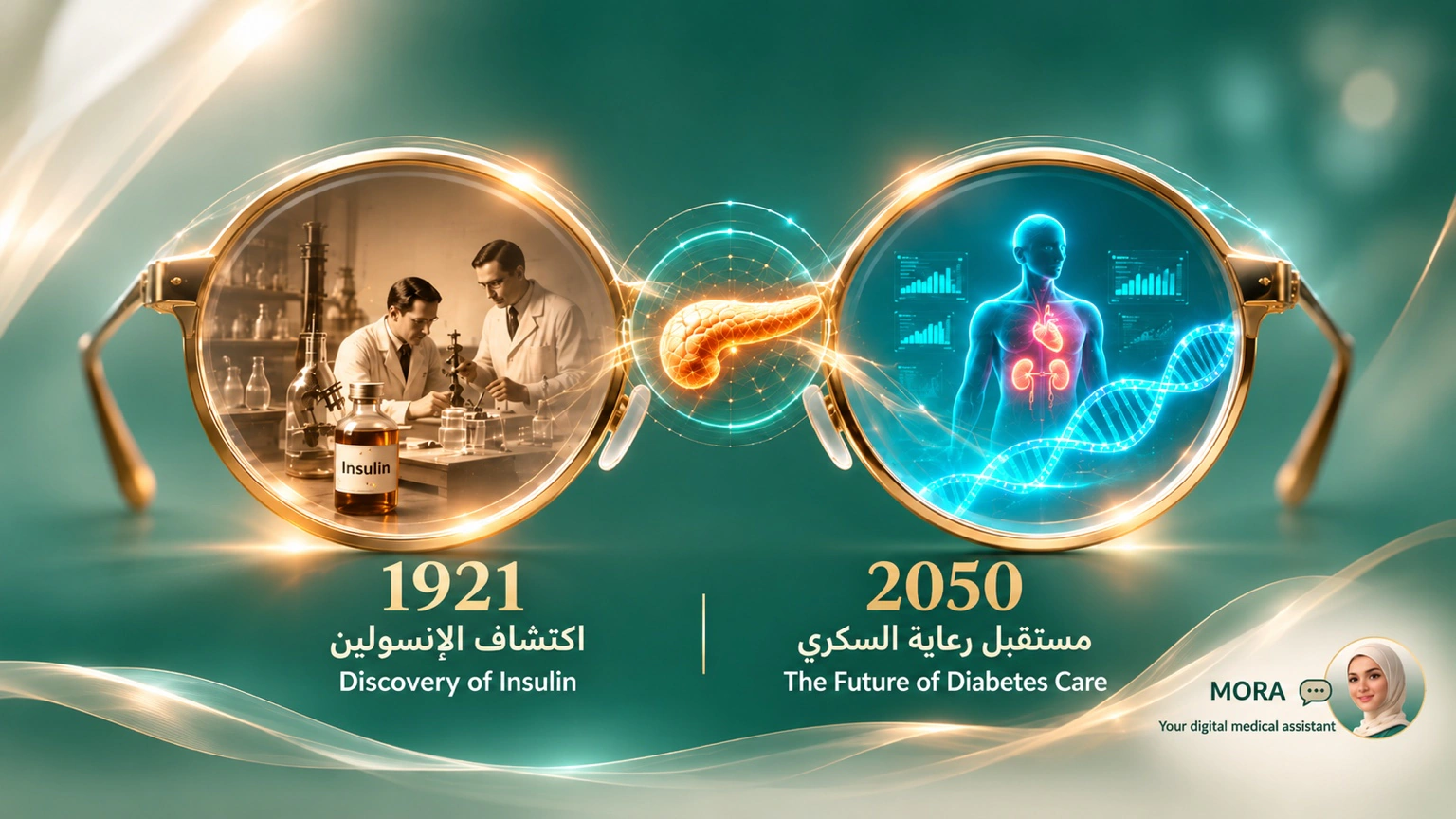
Today, as MORA guides us through a window in time from those early laboratories to the possibilities of 2050, a tension comes into view. Continuous glucose monitoring, automated insulin delivery and advanced applications of artificial intelligence are opening new possibilities for diabetes care, while access to treatment and appropriate care remains a major challenge worldwide.
The World Health Organization estimates that in 2022, around 59% of adults aged 30 and older living with diabetes were not taking medication to treat their diabetes.[7]
Between a discovery that changed the fate of millions and a future that could reshape care, one question matters most:
Will World Diabetes Day in 2050 commemorate a triumph of science, or will it still remind us that medical progress is incomplete until everyone can benefit from it?
Why 14 November?
World Diabetes Day began in 1991 through the International Diabetes Federation (IDF) and the World Health Organization (WHO). The date, 14 November, marks Frederick Banting’s birthday. On 20 December 2006, the UN General Assembly adopted resolution 61/225, designating 14 November as a UN day from 2007. It called for public education and national policies covering prevention, treatment and care.
IDF introduced the blue circle in the 2006 Unite for Diabetes campaign. The circle stands for unity and the blue evokes the shared sky and the UN flag. Its purpose is to make a collective responsibility visible.[1][2][3][20][21][23]
The experiment that changed diabetes care
In Toronto in 1921, Frederick Banting and Charles Best worked on pancreatic extracts under John Macleod’s scientific direction and with his laboratory resources. Biochemist James Collip refined the extract so it could be used effectively in patients. The breakthrough came from a team that connected laboratory work, purification and clinical care.
Leonard Thompson received an initial injection on 11 January 1922. On 23 January, Collip’s purified preparation produced the successful clinical response. Insulin made long-term survival possible for people with type 1 diabetes, who today continue to depend on it.[4][5]
- 1921Toronto research begins
- 1922Successful clinical use of purified insulin
- 1991IDF and WHO launch World Diabetes Day
- 2006UN resolution and the IDF blue circle campaign
- 2026Sensors and automated delivery in clinical care
- 2050Future scenario: care designed around people
The global picture in 2026
The IDF’s 2025 Atlas estimates that 589 million adults aged 20–79 lived with diabetes in 2024. It projects about 853 million in 2050. WHO estimates that 830 million adults aged 18 and older lived with diabetes in 2022. Different populations, years and estimation methods explain why the two totals should be read separately.
WHO reports that 59% of adults aged 30 or older living with diabetes in 2022 were not taking medication for it. Coverage was lowest in low- and middle-income countries. Reliable access also means affordable insulin, diagnostics, follow-up and education people can use in their own language.[6][7][8]
- 589million · IDF estimate, 2024Ages 20–79
- 830million · WHO estimate, 2022Ages 18 and older
- 853million · IDF projection, 2050Ages 20–79
From Europe to Austria
IDF estimates about 65.6 million adults aged 20–79 with diabetes in its Europe region in 2024, including about 479,400 in Austria. The IDF region extends beyond the European Union. Austria’s public health portal points people with type 2 diabetes to Therapie Aktiv, a structured care programme.
Vienna is our starting point because the global question has local consequences. An alert, a report or a referral matters only when someone can understand it and reach the appropriate care.[8][9]
Abu Dhabi: Prevention beyond the clinic
Abu Dhabi announced a personalised weight-management programme that combines clinical support with digital monitoring through Sahatna. It offers a practical example of connecting prevention and follow-up between visits.
In Abu Dhabi, Mohamed bin Zayed University of Artificial Intelligence is developing a polygenic risk score for type 2 diabetes using data from the Emirati Genome Project. This is ongoing research. Clinical usefulness and wider applicability require outcome data and independent validation.[10][11]
AI and diabetes care in 2050
Today’s technologies
In clinical use today, continuous glucose monitoring (CGM) measures glucose trends, and automated insulin delivery (AID) pairs sensor information with an algorithm and pump for eligible people. Use depends on individual needs, device availability and training. Some regulated AI systems can assist retinal screening in defined settings, with referral pathways for positive or unreadable results.
Emerging research
Research is testing whether predictive models can identify risk earlier, help clinicians prioritise follow-up or personalise care. Digital twins approximate aspects of an individual’s physiology or behaviour. Trials are exploring specific uses, such as adjusting AID settings. Each use needs external validation and evaluation in the population it is meant to serve.
A possible future in 2050
In an imagined 2050, a team might review kidney, cardiovascular and retinal risk together while discussing options with the person in front of them. Fagherazzi and colleagues argue for designing care around lived experience, extending the conversation beyond glucose time in range. Privacy, informed choice, equity, accessibility and accountable clinical oversight, with subgroup audits for algorithmic bias, determine whether such tools help in practice.[12][13][14][16][17][19]
Terms used in this article
- CGM · Continuous glucose monitoring
- A sensor measures glucose at frequent intervals and shows how it changes over time.[19]
- AID · Automated insulin delivery
- A sensor, algorithm and pump work together to adjust insulin delivery based on sensor readings.[19]
- Digital twin
- A computer model of selected aspects of a person’s condition or behaviour. Researchers study its use for specific tasks.[16]
- Polygenic risk score
- A research estimate combining contributions from several genetic variants. Its usefulness depends on the population and needs validation.[11]
- AI-assisted retinal screening
- Software analyses retinal images to help detect signs of retinopathy in defined screening programmes. Abnormal or unreadable images need follow-up.[12][14]
Then, now and what might come next
Compare the historical record, current practice, ongoing research and a possible scenario for 2050.[4][12][13][14][16]
Then · Historical record
In 1922, purified insulin opened the possibility of survival for people who previously had few effective options. Treatment and monitoring still required considerable daily work.
Now · Clinical practice
CGM, AID, structured education and risk-based organ protection are available for eligible people, with meaningful differences in access.
Ongoing research
Studies are testing risk prediction models and digital twins for specific tasks. Independent validation and evaluation in the intended populations remain necessary.
Tomorrow · Future scenario
A care team could use independently validated models to compare options with the patient, then act sooner when there is clear benefit. Evaluation would need to measure safety, daily burden and equitable access.
Questions to Discuss with Your Doctor
- What glucose monitoring options are available, and what does each show?
- What screening or follow-up checks could I discuss with you, and what is their purpose?
- How can we tell whether a new technology is approved and supported by evidence for the people it is intended for?
From Discovery to Care
The film opens with Reemora and a reconstructed Toronto laboratory, then moves through Vienna, glucose monitoring and an imagined consultation in 2050. MORA returns to pose the closing question. The historical and future scenes are cinematic illustrations. Device displays are fictional.
Film description and on-screen text
- 00:00–00:03 · Reemora. World Diabetes Day 2026.
- 00:03–00:12 · Toronto, 1921. Insulin research. The first successful insulin treatment follows in 1922.
- 00:12–00:20 · Vienna, 2026. MORA is a digital assistant. The film shows modern glucose monitoring.
- 00:20–00:28 · Future medicine, 2050. An imagined consultation.
- 00:28–00:41.6 · MORA asks: Will we still need World Diabetes Day in 2050? Reemora Medical Insights.
What progress would feel like
Imagine fewer preventable complications, more years with clear vision and healthy kidneys, and less time spent organising care. Imagine being able to get insulin and appropriate screening wherever you live. Those outcomes would give World Diabetes Day a different purpose.
Until then, 14 November asks something the next device alone cannot answer: who is still waiting for the benefits of discovery?[2][6][7][13]
Sources and editorial method
We checked historical claims against the Toronto archives and the UN record, prevalence against IDF and WHO, and current practice against professional guidance. The 2050 roadmap is a perspective and the AI paper a narrative review. Trials are cited as evidence for the intervention and population studied. The future scenes and comparisons are editorial scenarios.
Show all references 21
- WHO · World Diabetes DayCampaign archive, ongoing
- UN General Assembly · A/RES/61/22520 December 2006
- IDF · About IDF and the blue circleInstitutional history, ongoing
- University of Toronto · Leonard ThompsonThomas Fisher Rare Book Library, archival clinical records from 1922
- Parks Canada · Discovery of InsulinNational Historic Event, 1921–1922
- IDF Diabetes Atlas · 11th edition2025 edition, 2024 estimates and 2050 projections
- WHO · Diabetes fact sheet3 November 2026 update; prevalence and treatment figures refer to 2022
- IDF Diabetes Atlas · Europe and Austria2025 edition, global and country estimates for 2024 and projections to 2050
- Österreichisches Gesundheitsportal · Diabetes mellitus Typ 2National health portal, links to Therapie Aktiv
- Abu Dhabi Media Office · Personalised Weight Management Programme2025 programme announcement
- MBZUAI · Polygenic risk score for type 2 diabetesResearch project, 2025–2030
- ADA · Standards of Care in Diabetes—2026Released 8 December 2025 · Diabetes Care, vol. 49, suppl. 1 (2026), §§ 2, 7, 8, 10, 11, 12
- Fagherazzi et al. · Diabetes Care in 205021 July 2026 online · perspective · DOI 10.2337/dci26-0059
- Dubský et al. · Artificial Intelligence in Diabetes Care30 March 2026 online; June 2026 issue · narrative review · DOI 10.1111/dom.70720
- Human-machine co-adaptation to automated insulin delivery2025 · randomised clinical trial using digital twin technology
- WHO · Ethics and governance of artificial intelligence for health28 June 2021 · guidance
- ADA · Diabetes TechnologyDiabetes Care 2026;49(Suppl. 1):S150–S165 · DOI 10.2337/dc26-S007
- IDF · Diabetes awarenessCampaign history and symbol, ongoing
- Nobel Prize · Frederick G. Banting, FactsBiographical record
- IDF · World Diabetes Day Resource HubCampaign resources, ongoing
- IDF · KiDS school toolkit: Why a blue circle?Campaign background, symbol history and meaning
Diabetes across specialties
 Series 02Insight 01
Internal medicine and nephrology
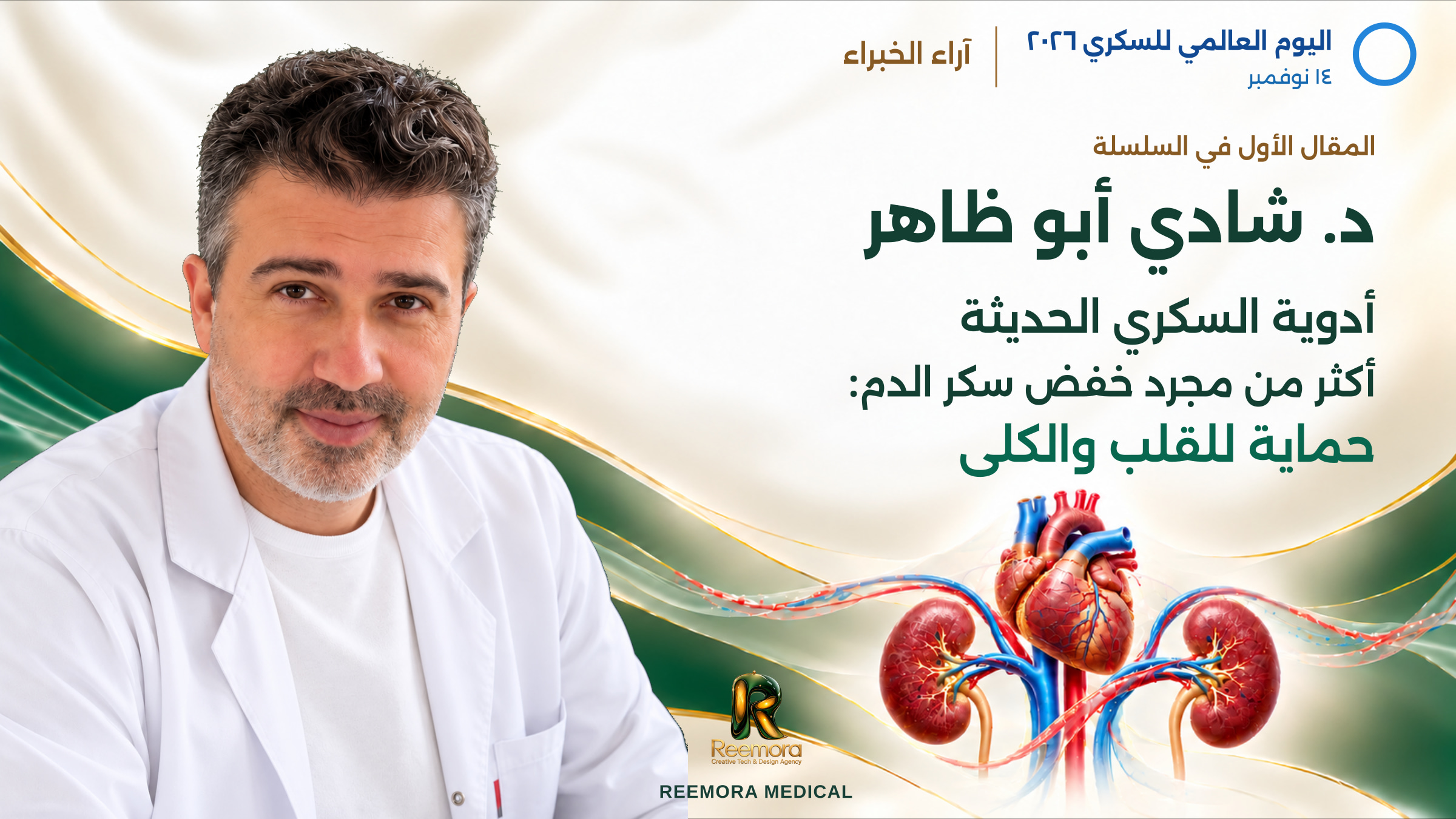
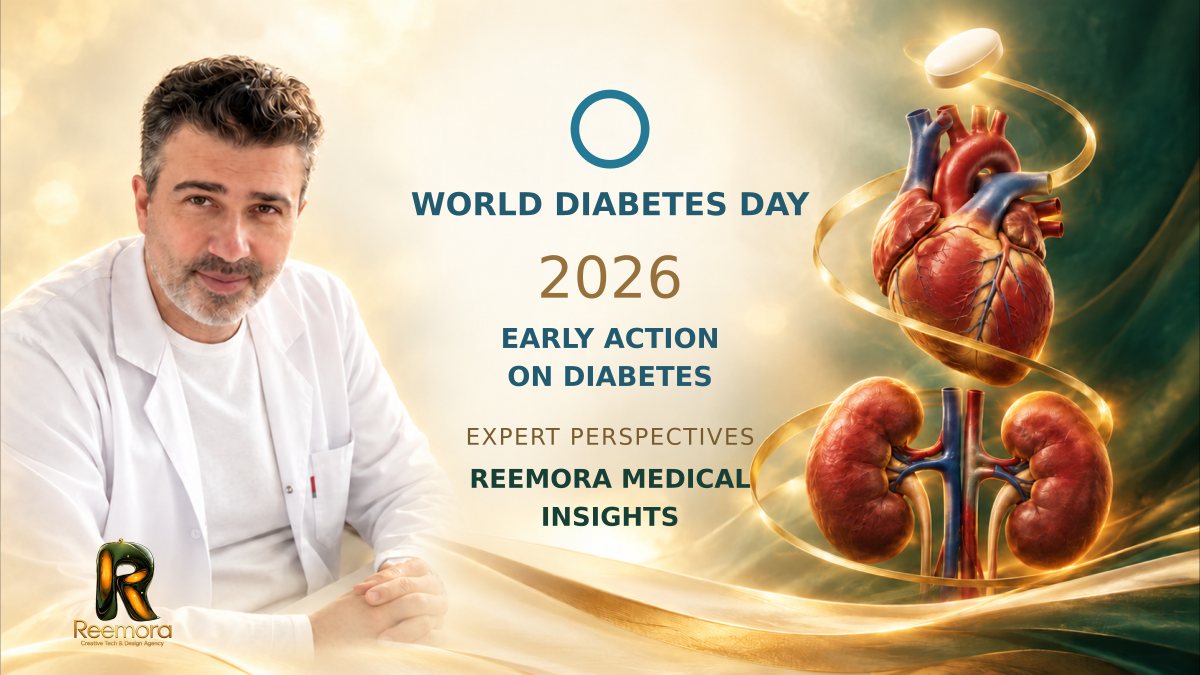
Modern diabetes medicines — More than blood sugar reduction: protection for the heart and kidneys
 Series 02Insight 02
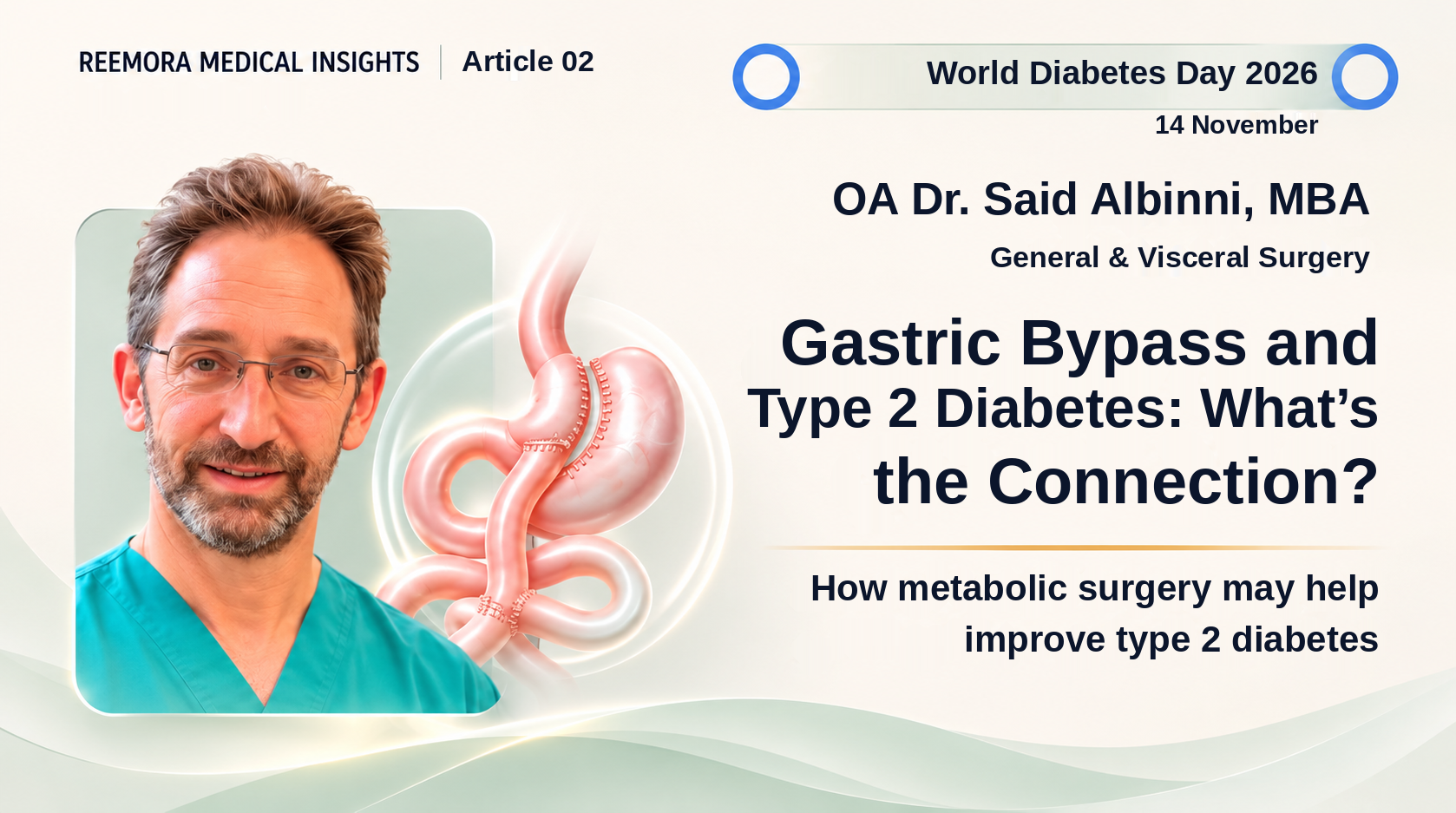
General and visceral surgery
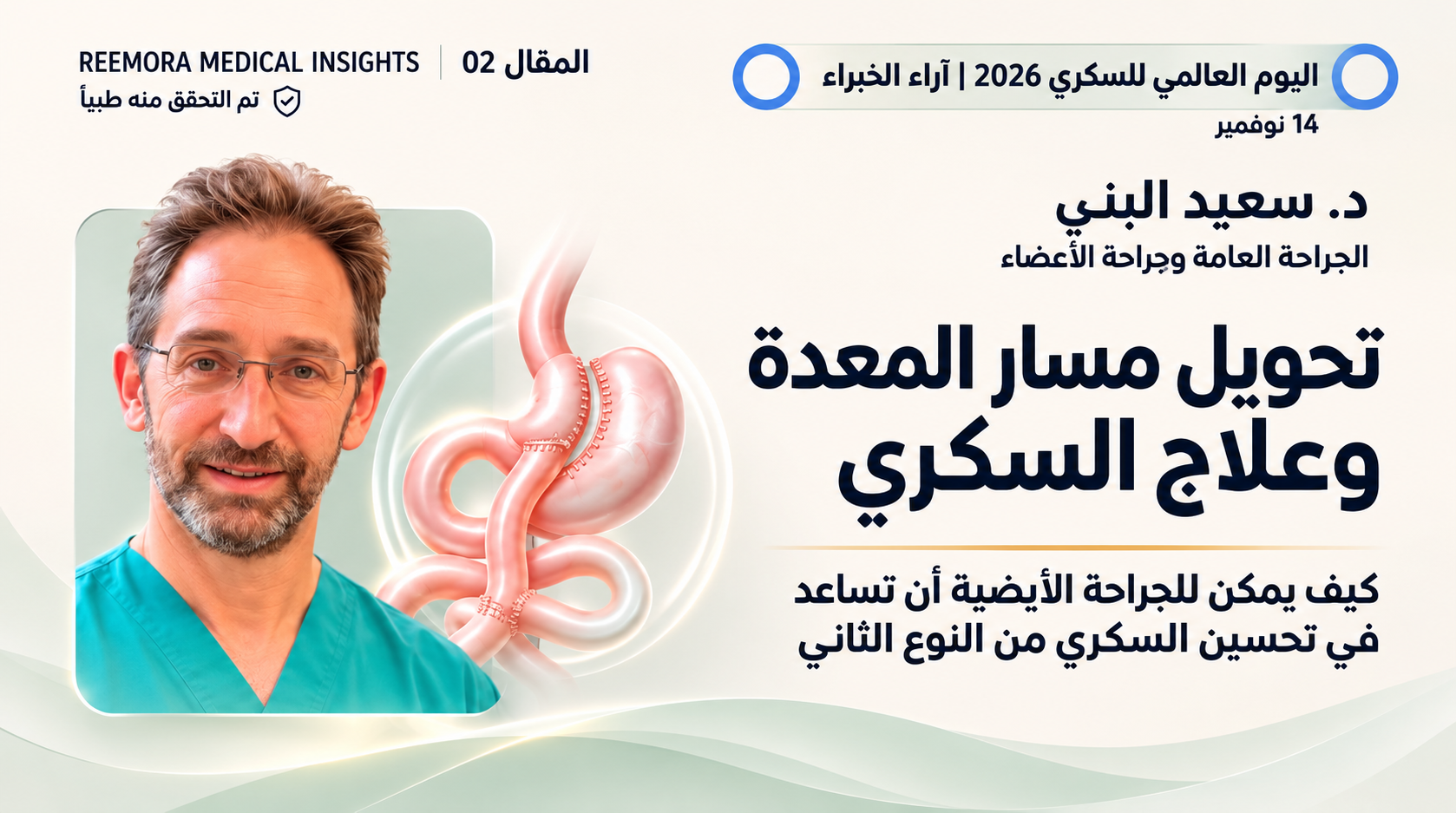
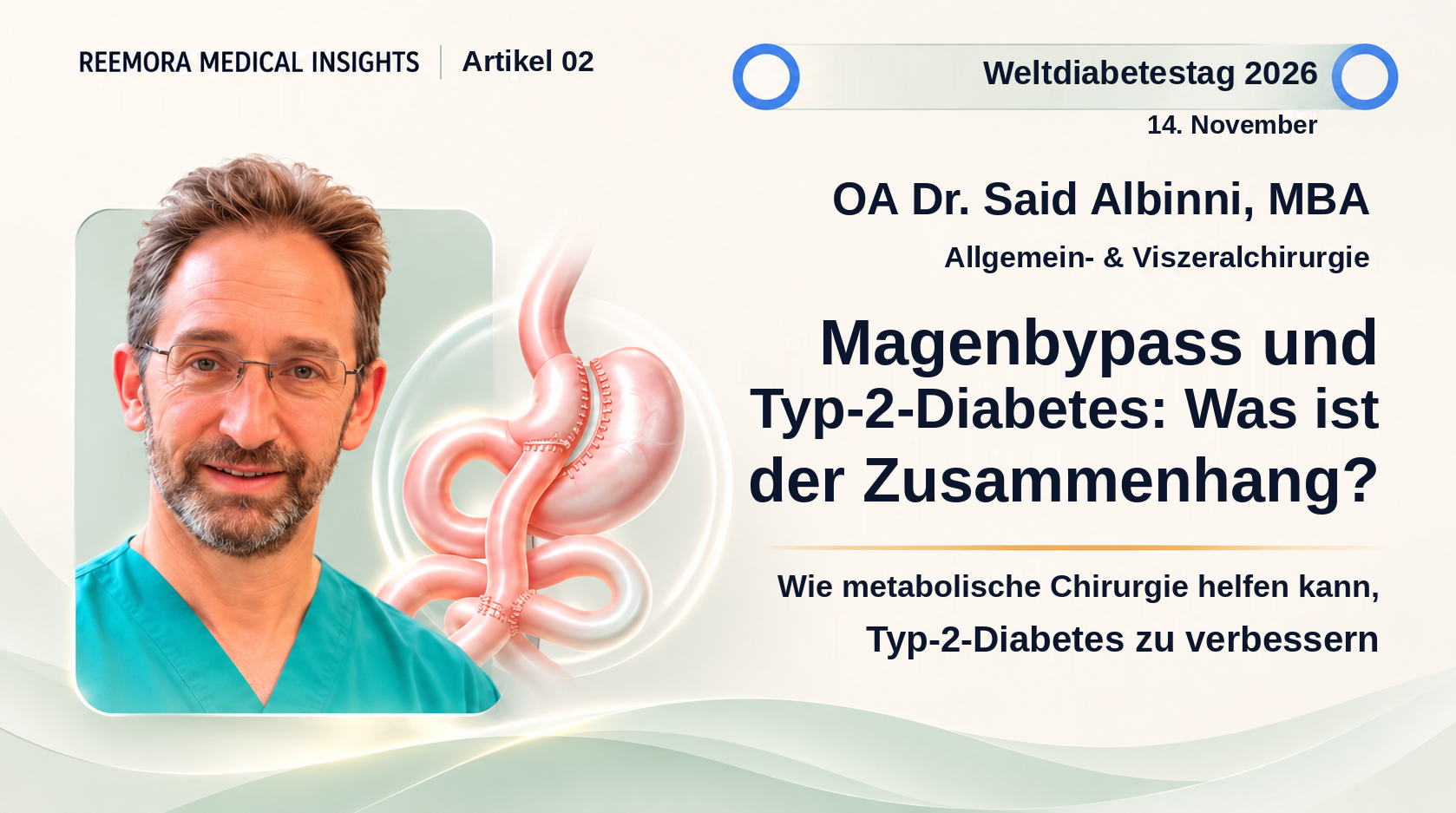
Gastric Bypass and Type 2 Diabetes: What’s the Connection?
 Series 02Insight 03
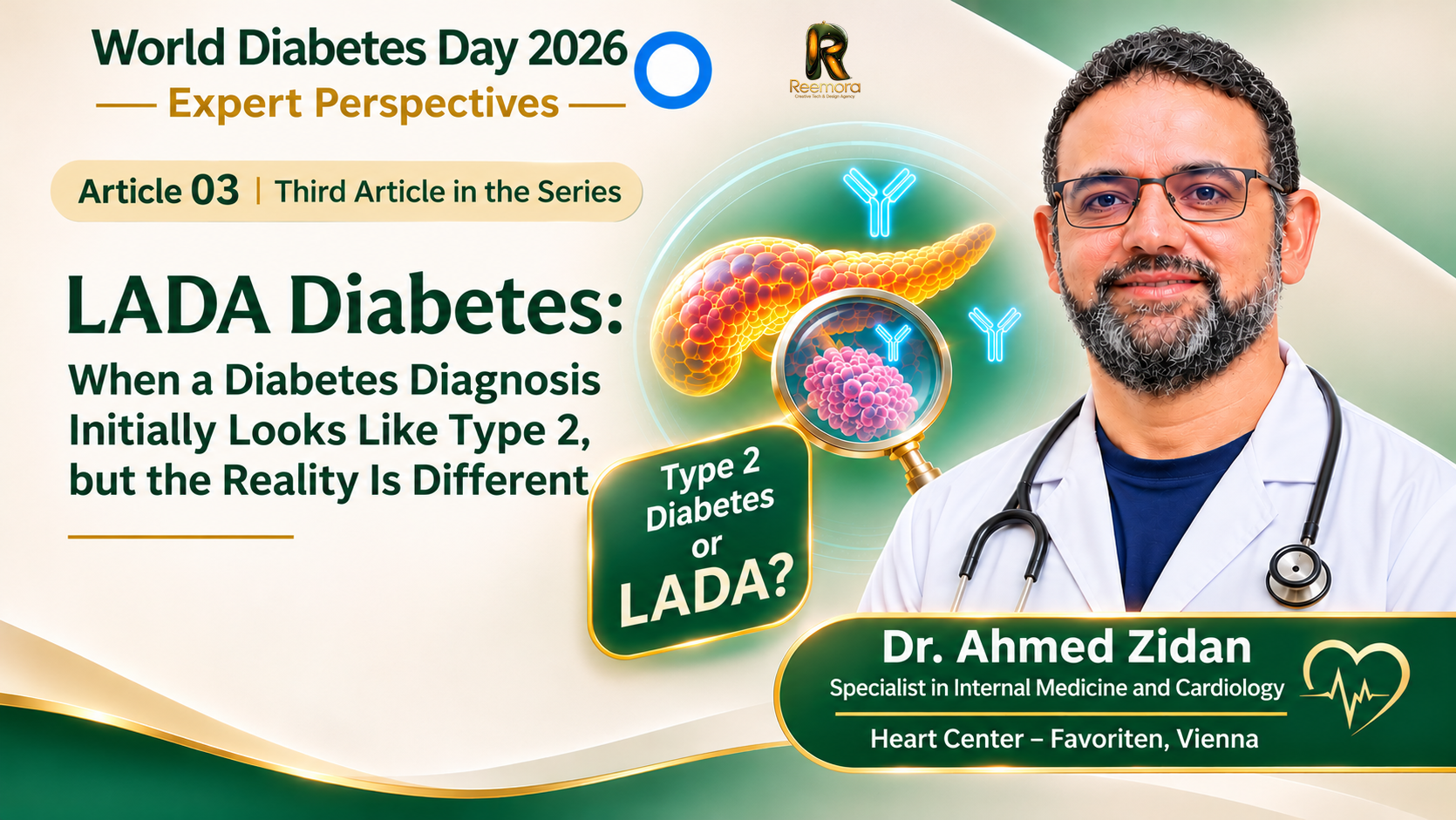
Specialist in Internal Medicine and Cardiology
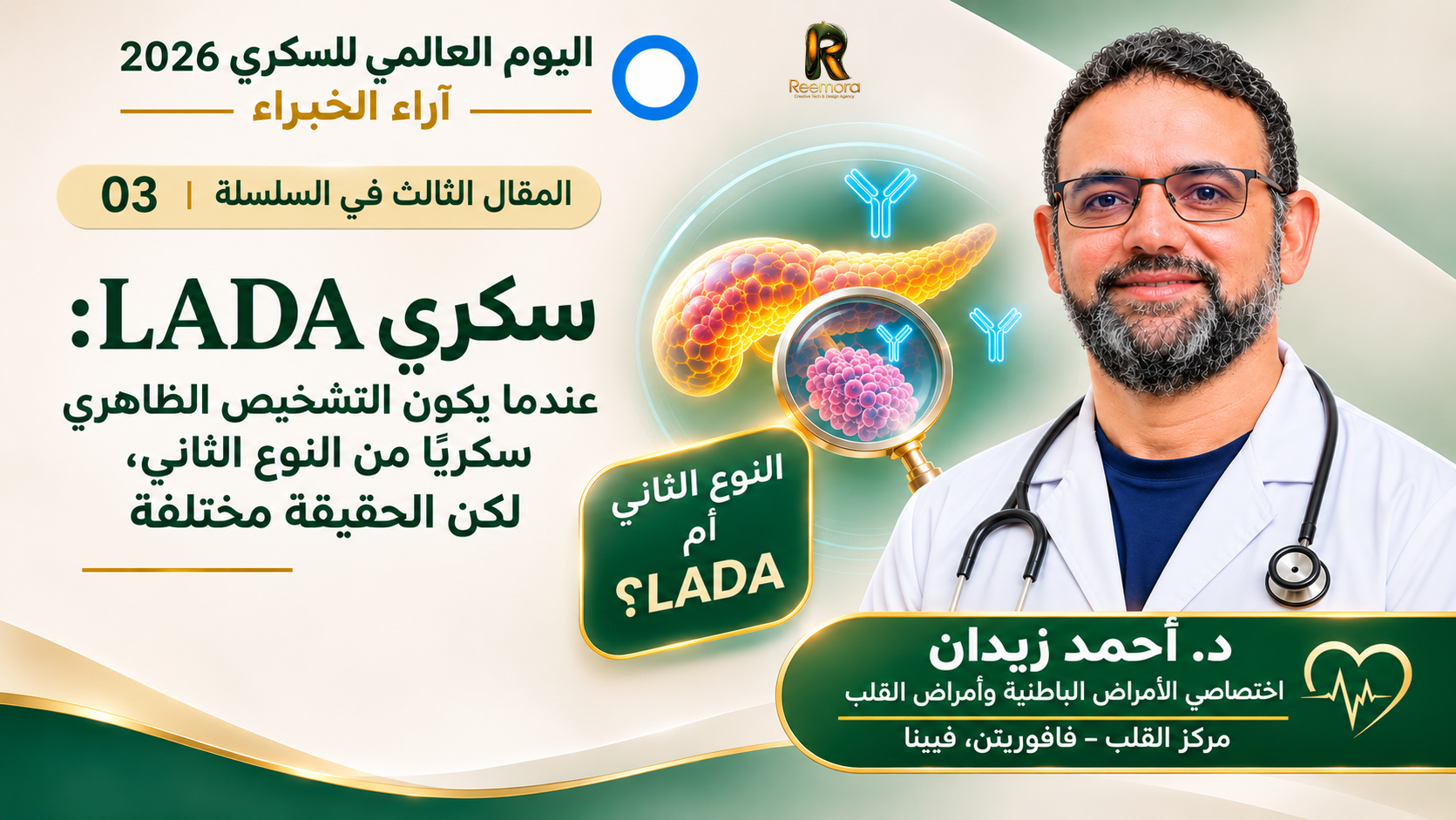
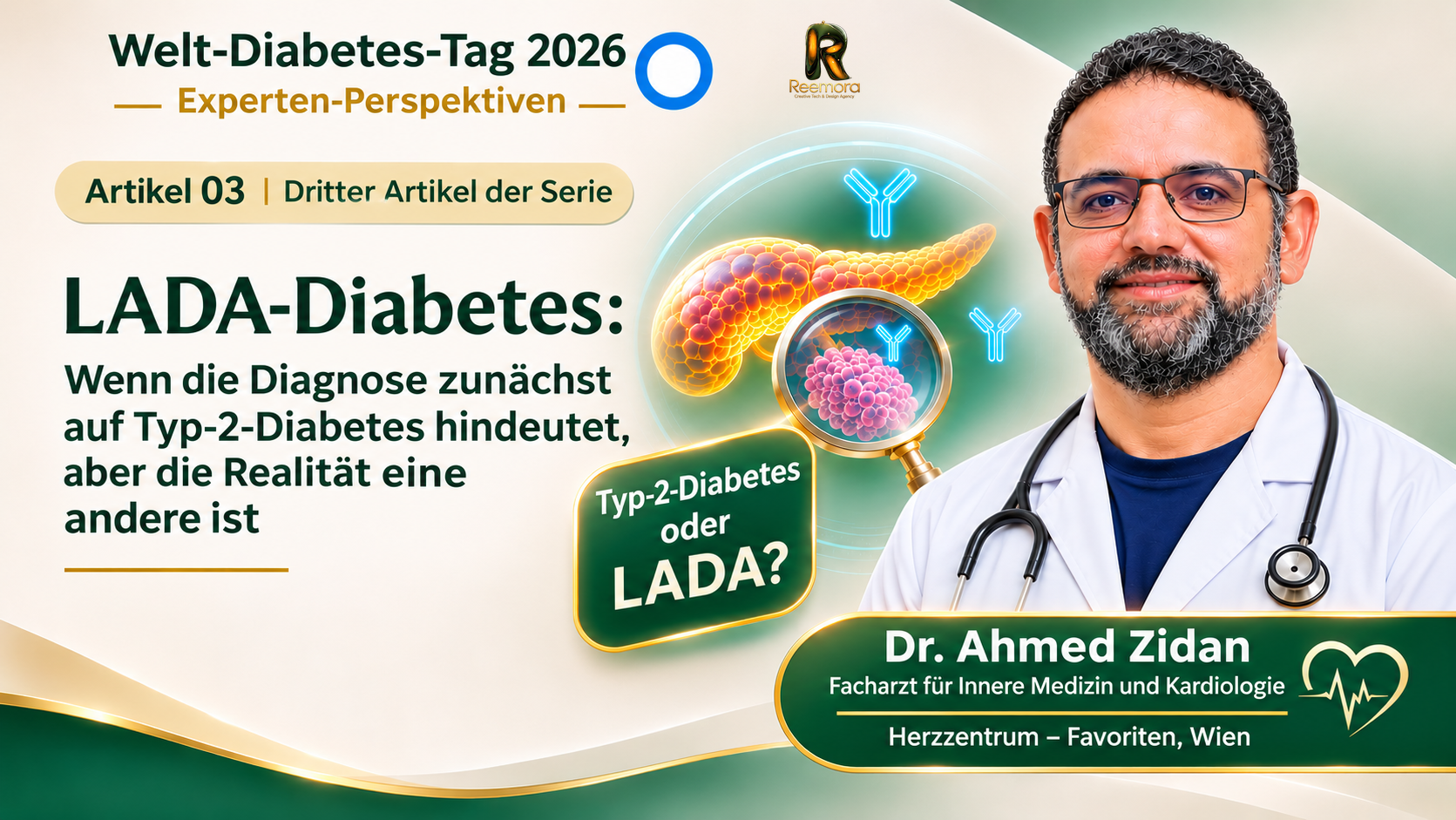
LADA diabetes: When presumed type 2 diabetes turns out to be something else
Reemora is a creative technology agency and the editorial publisher. This feature is general information and cannot replace individual medical advice, diagnosis or treatment.
Back to top